



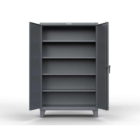
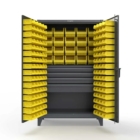
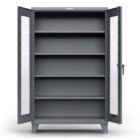
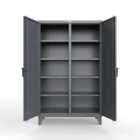
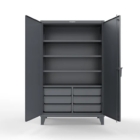
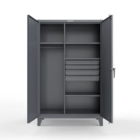
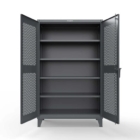
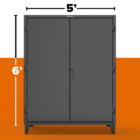
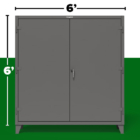

Why Welds Matter: The Hidden Strength Inside Every Strong Hold All-Welded Cabinet
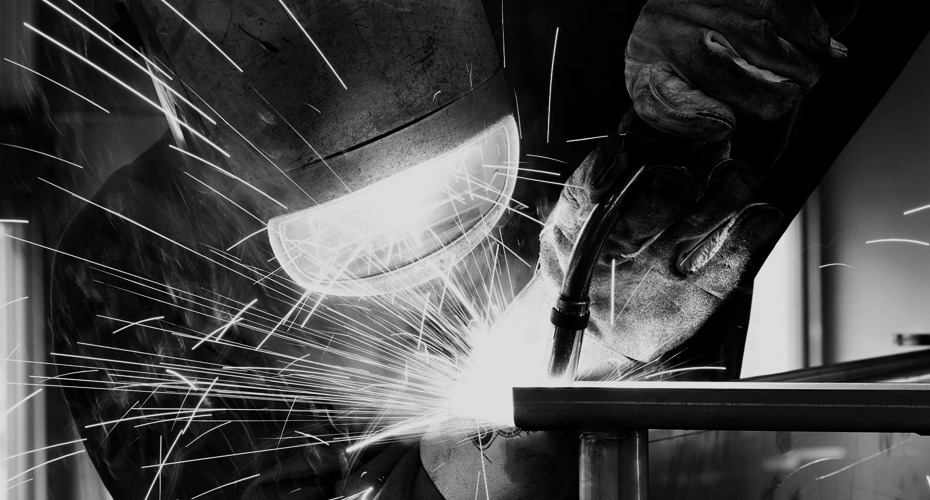
Welds are the Strength You Don’t See (But Rely On)
When buyers compare industrial storage cabinets, most focus on the obvious: steel gauge, dimensions, weight capacity, and price. But the truth is, cabinets rarely fail because of flat steel panels; they are most likely to fail at the joints.
The real strength of any industrial storage cabinet lies in how the steel is joined together.
Weld quality determines long-term durability, structural integrity, safety, and product lifespan. A cabinet can be made from thick steel, but without strong, properly engineered welds, that strength never reaches its full potential.
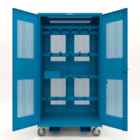
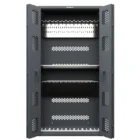
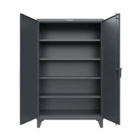
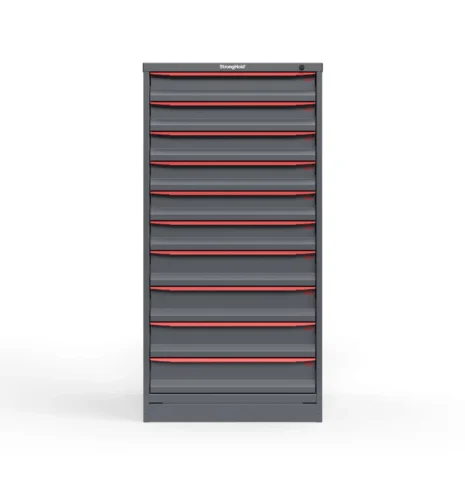
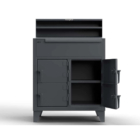
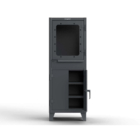
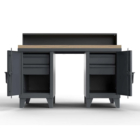
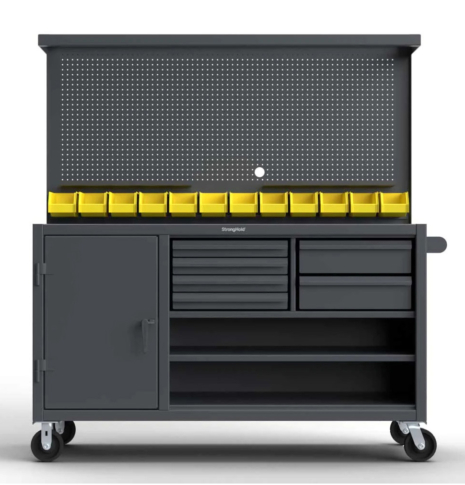
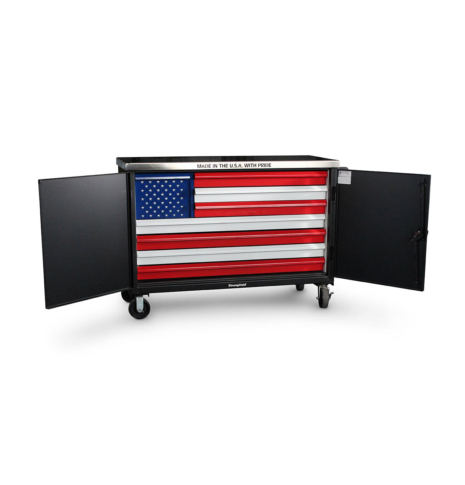
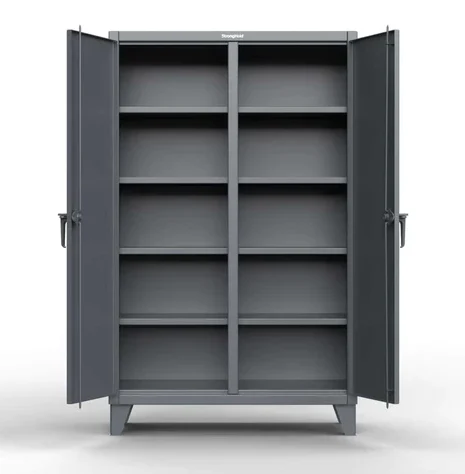
At Strong Hold, we design storage from the inside out. Bent steel is only part of the equation; how it’s joined is what separates equipment built for decades of real work from products that only look tough on installation day. Which is why we are proud to offer durable all-welded cabinets in 12- and 14-gauge steel.
What “All-Welded Cabinet” Really Means
“All-welded cabinet” is a term you’ll see often in industrial storage, but not everyone understands what it actually means.
An all-welded cabinet is manufactured as a single, integrated structure. Unlike bolt-together or knock-down cabinets, there are no mechanical fasteners holding critical structural components together.
Why this matters:
- No weak fastener points that loosen over time
- Greater rigidity under heavy loads
- Better load distribution across the entire cabinet
- Reduced vibration loosening in demanding environments
- Longer lifespan in shops, warehouses, and production floors
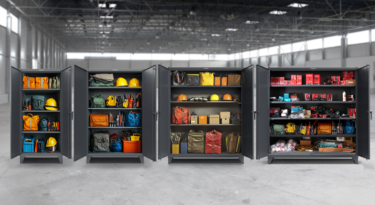
Because Strong Hold 12-gauge and 14-gauge cabinets are “all-welded,” they ship fully assembled and ready for immediate use; no installation compromises and no “assembly required.”
Types of Welds Used in Strong Hold Cabinets
Not all welds serve the same purpose. Strong Hold all-welded cabinets use multiple welding methods depending on where strength, flexibility, or reinforcement is needed.
Fillet Welds
Fillet welds are some of the most common structural welds in industrial manufacturing. They join two surfaces at perpendicular angles, exactly the kind of connections found in cabinet frames, seams, and support structures.
Their strength comes from deep penetration and maximizing surface contact between components.
Spot Welds (Where Applicable)
Spot welds are used strategically for reinforcement and consistency.
They allow for fast, repeatable connections that add strength without unnecessary weight or material buildup. When applied correctly, they improve structural integrity while maintaining clean production efficiency.
Seam Welds
Seam welds help reinforce the cabinet at critical points where the steel meets.
These welds:
- Maximize rigidity
- Reduce flexing and twisting
- Help keep dust and debris out
- Improve long-term structural stability
In heavy industrial environments where vibration and impact are common, continuous welds make a measurable difference.
Reinforcement Welds
Some areas take more abuse than others, and that’s where reinforcement welds matter most.
Strong Hold adds extra weld reinforcement around:
- Drawer slide supports
- Shelf mounting zones
- Base structures
- High-load corners
Often, this means adding more weld than the minimum requirements call for, because we’d rather over-engineer than under-deliver.
Door Hinge Welds: The Most Abused Connection Point
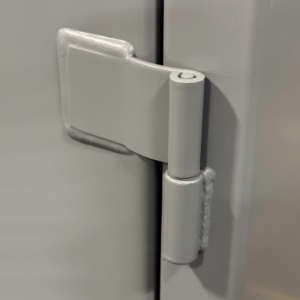
If there’s one place where cheap cabinets fail first, it’s the hinges.
Doors get slammed, pulled, leaned on, and opened thousands of times over their lifespan. Weak hinge welds lead to sagging doors, misalignment, and eventually total failure.
Strong Hold prevents door hinge failure in our all-welded cabinets with:
- Heavy-duty hinges
- Bushing components where the male and female hinge parts meet
- Heavy-gauge steel backing
- Robust weld points designed to resist fatigue
Because the reality is simple: If the door hinge fails, the cabinet fails.
How Weld Quality Impacts Product Lifespan
Poor weld quality doesn’t just shorten product life; it creates real operational risks.
Low-quality welds can lead to:
- Cracking
- Metal fatigue
- Frame distortion
- Door misalignment
- Safety hazards
High-quality welds, on the other hand:
- Increase structural rigidity
- Maintain alignment over years of use
- Reduce maintenance issues
- Protect your investment long-term
For facility managers and procurement officers, this is where lifecycle cost considerations should matter more than upfront price. A cabinet that lasts decades ultimately costs less and supports safer, more efficient operations.
Welds + Heavy-Gauge Steel: Why the Combination Matters
Heavy steel alone doesn’t create industrial strength.
Without proper welds, thick steel can flex, twist, or fatigue at stress points. Welds ensure that every ounce of the steel’s strength is fully utilized.
This is where Strong Hold’s engineering philosophy comes together:
- 12-gauge steel + precision welds = an all-welded cabinet built to earn its 99-year warranty.
Real-World Performance: Where Strong Welds Matter Most
Strong welds prove their value where failure isn’t an option, including:
- Industrial environments with impact risk
- High-traffic facilities with constant use
- Critical support areas requiring structural stability
- Storage for high-value tools and equipment
- Around-the-clock operations, where downtime costs money
In these spaces, weld integrity isn’t just a feature; it’s protection against downtime, safety hazards, and replacement costs.
How to Evaluate Weld Quality When Buying Industrial Storage
Not every buyer is a welding expert, but you don’t need to be to spot quality.
Here’s a quick checklist:
- Is the cabinet all welded, or does it use bolts?
- Does the cabinet feel rigid when moved?
- Do doors stay aligned when opened and closed?
- Are weld seams consistent and clean?
- Does the cabinet ship fully assembled?
If you’re investing in industrial storage, these are questions worth asking before you buy.
Industrial Strength That Starts at the Welds
Welds ultimately are the hidden backbone of cabinet quality and performance.
They determine how a product handles stress, how long it lasts, and how well it protects what matters most. All-welded construction isn’t a marketing phrase; it’s a long-term reliability strategy.
Strong Hold builds storage engineered to perform for decades, not months or years.
Ready to see the difference?
- Explore our industrial storage cabinet solutions
- Contact your preferred Strong Hold dealer
- Use our Custom Quote form to build storage to your specs