





Tool Carts vs. Service Carts: Choosing the Right Mobile Storage Solution for Your Facility
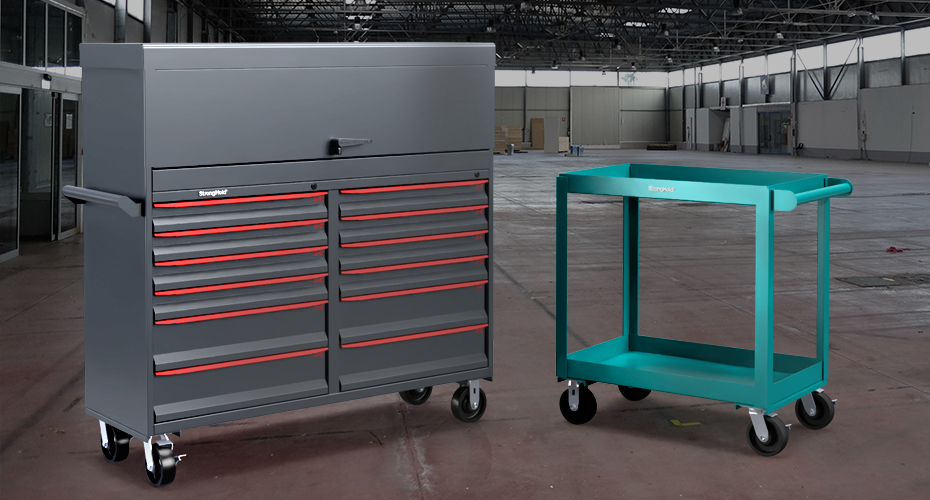
Mobile Storage Solutions Maximize Efficiency in Industrial Settings
In manufacturing, maintenance, warehousing, and assembly operations, efficiency often comes down to one simple principle: keeping the right resources in the right place at the right time.
Mobile storage solutions help facilities reduce wasted motion, improve organization, and increase productivity by bringing tools, parts, and supplies closer to the point of use. But while many industrial carts may appear similar at first glance, not all carts are designed for the same purpose.
Two of the most common options are tool carts and service carts. Although both improve mobility and workflow, each serves a distinct function within an operation. Understanding the differences can help you choose the right solution for your facility and maximize your investment.
Why Mobile Storage Matters
Every unnecessary trip across a facility adds up. Whether employees are retrieving tools, transporting materials, or searching for supplies, wasted movement can negatively impact productivity and labor efficiency.
Mobile solutions, like carts, help eliminate these inefficiencies by:
- Reducing travel time between workstations
- Keeping tools, parts, and supplies close to where work is performed
- Supporting lean manufacturing and 5S initiatives
- Improving organization and accountability
- Creating safer, more efficient work environments
When properly implemented, mobile carts can streamline workflows and help employees spend more time performing value-added work.
What Is a Tool Cart?
Definition of a Tool Cart
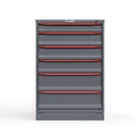
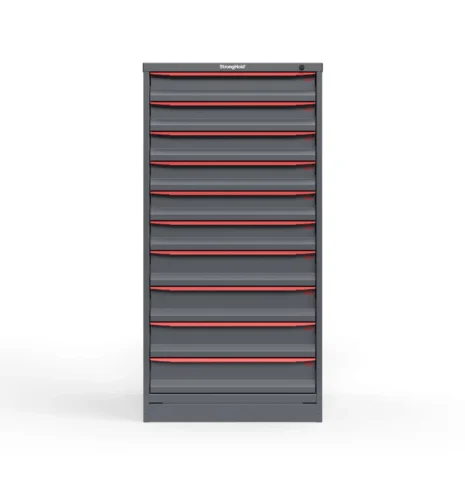
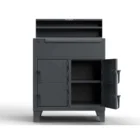
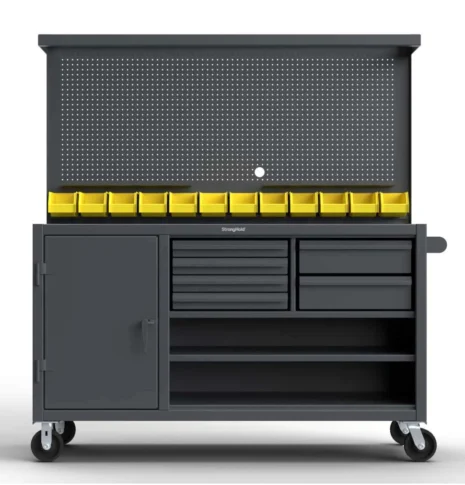
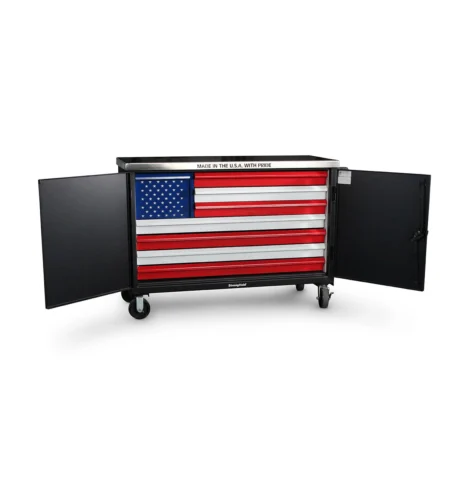
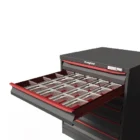
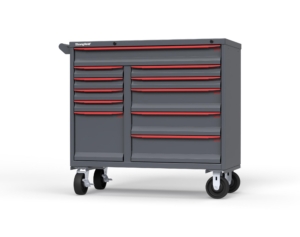
A tool cart is a mobile workstation designed to securely store, organize, and transport tools throughout a facility. Unlike general-purpose carts, tool carts prioritize organization, security, and accessibility for technicians and maintenance personnel. Strong Hold Modular Drawer Storage Tool Carts offer high-density tool storage and quick visual inventory.
Common Features of a Tool Cart
Most industrial tool carts include features such as:
- Lockable drawers
- Organized storage compartments
- Durable work surfaces
- Tool-specific drawer sizes
- High-density storage capacity
These features help users keep tools protected, organized, and readily available throughout the workday.
Typical Tool Cart Applications
Tool carts are commonly used by:
- Maintenance teams
- Tool crib operations
- Mechanics and technicians
- Manufacturing maintenance departments
Anywhere employees rely on specialized tools to perform repairs, inspections, or maintenance, tool carts can improve efficiency and organization.
Benefits of a Tool Cart
Tool carts offer several advantages for maintenance and technical personnel:
- Bring tools directly to the work area
- Improve tool organization
- Increase tool accountability
- Enhance security for valuable equipment
- Reduce time spent searching for tools
- Create a mobile workspace for repairs and inspections
For facilities where downtime is costly, faster access to the right tools can significantly improve productivity.
What Is a Service Cart?
Definition of a Service Cart
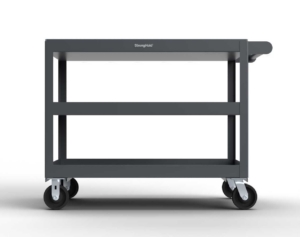
A service cart is a mobile platform designed to transport materials, supplies, parts, and equipment throughout a facility. Rather than focusing on tool storage, service carts prioritize efficient movement of products and materials between workstations.
Common Features of a Service Cart
Typical service cart features include:
- Open shelf designs
- Large carrying capacities
- Access from multiple sides
- Heavy-duty casters
These characteristics make service carts ideal for fast-paced environments where materials need to move continuously throughout the day.
Typical Applications of a Service Cart
Service carts are commonly found in:
- Manufacturing assembly lines
- Maintenance departments
- Shipping and receiving operations
- Warehouses
- Material replenishment routes
- Kitting operations
Their versatility allows them to support a wide range of material handling tasks.
Benefits of a Service Cart
Service carts provide several operational advantages:
- Faster transport of materials and supplies
- Increased employee productivity
- Reduced manual carrying and lifting
- Greater flexibility across departments
- Improved workflow efficiency
For facilities focused on material movement, service carts can play a critical role in keeping production flowing smoothly.
Tool Cart vs. Service Cart: Key Differences
While both cart types improve mobility and workplace efficiency, they are built for different jobs.
Purpose
A service cart is designed primarily to transport materials, parts, and supplies throughout a facility.
A tool cart is designed to store, organize, and transport tools while keeping them secure and accessible.
Storage Style
Service carts typically feature open shelving that allows users to quickly load and unload materials.
Tool carts rely on drawers, compartments, and organizers that protect tools and keep them properly arranged.
Security
Security is usually not a major consideration for service carts.
Tool carts often include locking drawers and compartments to help prevent loss, theft, or unauthorized access to valuable tools.
Accessibility
Service carts offer open access from multiple sides, making them ideal for high-volume material handling environments.
Tool carts prioritize organization, ensuring technicians know exactly where each tool is located.
Work Surface
Many service carts focus solely on transportation.
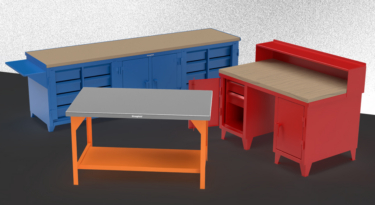
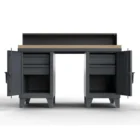
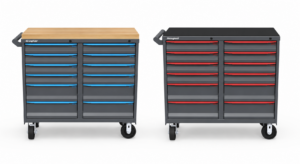
Tool carts frequently include built-in work surfaces, like maple butcher blocks or ABS (Acrylonitrile Butadiene Styrene) tops, that allow technicians to perform repairs, inspections, and assembly tasks directly from the cart.
Ideal Applications
Service carts are best suited for transporting:
- Components
- Inventory
- Supplies
- Parts
- Materials
Tool carts are best suited for:
- Maintenance teams
- Mechanics
- Technicians
- Repair personnel
- Tool management applications
In Simple Terms
- If your primary goal is moving materials, choose a service cart.
- If your primary goal is to organize and secure tools, choose a tool cart.
Many facilities find the greatest success by using both.
When to Choose Which Cart
When to Choose a Tool Cart
A tool cart may be the better choice if:
- Tool organization is a priority
- Expensive tools require protection and access control
- Technicians need a mobile workstation
- Inventory control and accountability are important
Common applications include:
- Maintenance departments
- Machine repair teams
- Manufacturing technicians
When downtime is costly, a tool cart helps ensure technicians have immediate access to the tools they need.
When to Choose a Service Cart
A service cart may be the better choice if:
- Materials frequently move between workstations
- Parts replenishment occurs daily
- Open access is more important than security
- Large or bulky items need transportation
Common applications include:
- Kitting operations
- Production assembly lines
- Warehouse order fulfillment
- Maintenance supply delivery
For organizations focused on material flow, service carts provide a simple and effective solution.
Can You Benefit from Using Both Tool and Service Carts?
Absolutely.
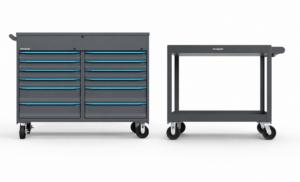
Many industrial facilities utilize both cart types because each serves a different purpose within the operation.
Service carts help move materials where they are needed.
Tool carts help maintenance and technical teams perform their jobs more efficiently.
For example, a manufacturing facility may use service carts to deliver components to production stations while maintenance technicians use tool carts to respond quickly to equipment issues.
Together, they create a more organized, productive, and responsive operation.
What to Look for in Any Industrial Cart
Regardless of cart type, several factors should be considered before making a purchase.
Construction Quality
Look for:
- All-welded steel construction
- Heavy-duty shelves and drawers
- Industrial-grade casters
Capacity
Evaluate:
- Overall load capacity
- Shelf weight ratings
- Drawer capacities
- Application-specific requirements
Mobility
Consider:
- Smooth-rolling casters
- Ergonomic handles
- Maneuverability in tight spaces
Durability
Choose carts that offer:
- Coated finishes
- American-made steel construction
- Long-term warranty support
A cart is an investment that should withstand years of daily use in demanding environments.
Why Strong Hold Carts Are Built Differently
At Strong Hold, we build industrial carts the same way we build all of our storage solutions: over-engineered for durability and designed for real-world industrial environments.
Our carts feature:
- American-made steel construction
- All-welded designs
- Heavy-duty shelves and drawers
- Fully assembled delivery
- Configurations for both material handling and tool organization
- Industry-leading warranties
Built in Louisville, Kentucky, Strong Hold carts are designed to withstand the abuse of manufacturing facilities, maintenance departments, warehouses, and industrial operations across the country.
Transform Your Facility With Tools and Service Carts from Strong Hold
Choosing between a tool cart and a service cart comes down to understanding how your team works.
If your operation depends on moving materials efficiently, a service cart may be the ideal solution.
If organization, security, and tool accountability are your priorities, a tool cart is often the better choice.
Either way, the right mobile storage solution can reduce wasted motion, improve productivity, and help keep your facility operating at peak performance.
Explore Strong Hold’s lineup of industrial carts and discover how American-made mobile storage can help your team work smarter every day.
Bring mobility, organization, and efficiency to your operation with service and tool carts from Strong Hold.
- Shop service and tool carts online
- Get a quote
- Contact your preferred Strong Hold dealer